

The Sketchbook Stories
Reflections on creativity, curiosity, the artist’s journey, and the sketchbook.
Written by: Lindsay Agnew
Creative Play for Grown-Ups: Why Adults & Seniors Need to Create Art Too
Creativity doesn’t fade with age—it waits. And when we return to it, our brains, hearts, and sense of connection benefit.
2/4/20264 min read
People often think of creative play as something meant for children—messy, imaginative, and full of discovery. Somewhere along the way, many adults are taught that creativity should be productive, polished, or something they simply don’t make time for.
But creativity doesn’t disappear with age. It simply waits.
For adults and seniors, creating art becomes less about performance and more about presence. It’s about engaging the mind, reconnecting with memory, and finding joy in the process rather than the outcome. Whether someone hasn’t made art in years—or is picking it up again after decades—creative play offers a powerful way to stay mentally active, emotionally connected, and deeply human.
What Art Does for the Adult & Senior Brain
Creating art activates multiple regions of the brain at once:
The prefrontal cortex (decision-making, focus, planning)
The motor cortex (hand-eye coordination)
The limbic system (emotion and memory)
The default mode network (imagination, reflection)
This combination is powerful. It’s one of the few activities that blends logic, emotion, memory, and physical movement in a low-stress, enjoyable way.
Research consistently shows that creative activity can:
Increase neuroplasticity (the brain’s ability to form new connections)
Reduce stress hormones like cortisol
Improve mood and emotional regulation
Support memory retention and cognitive flexibility
In simple terms, art helps keep the brain awake, engaged, and adaptable.
Art as Memory, Identity, and Reconnection
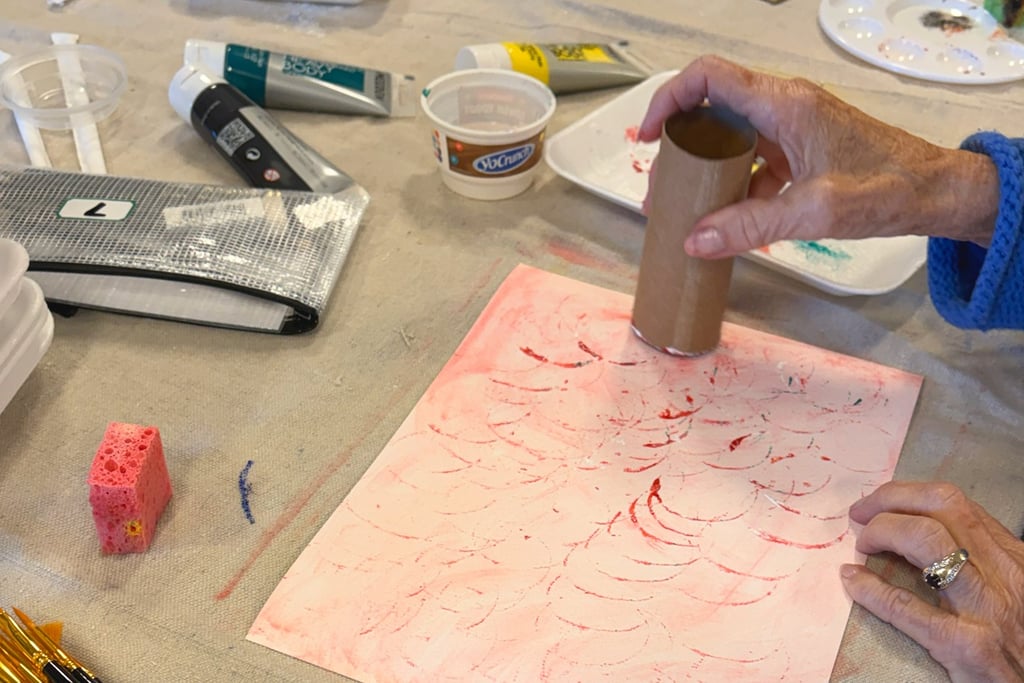
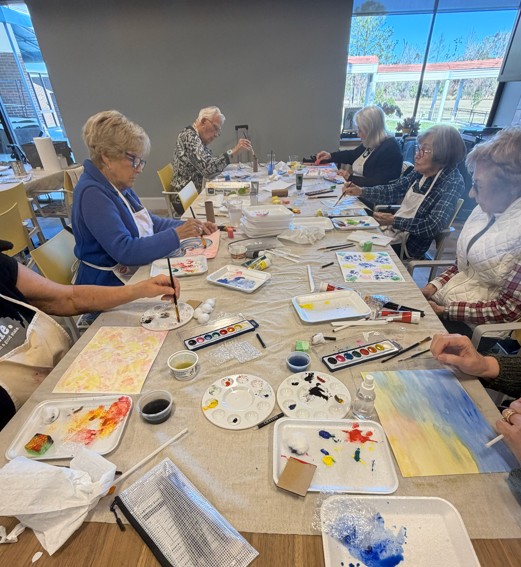
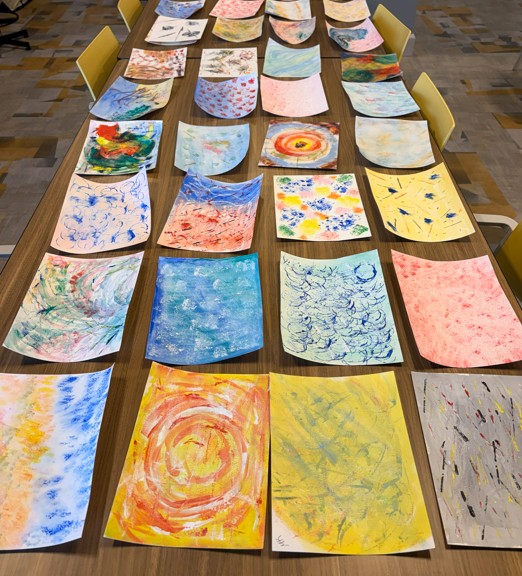
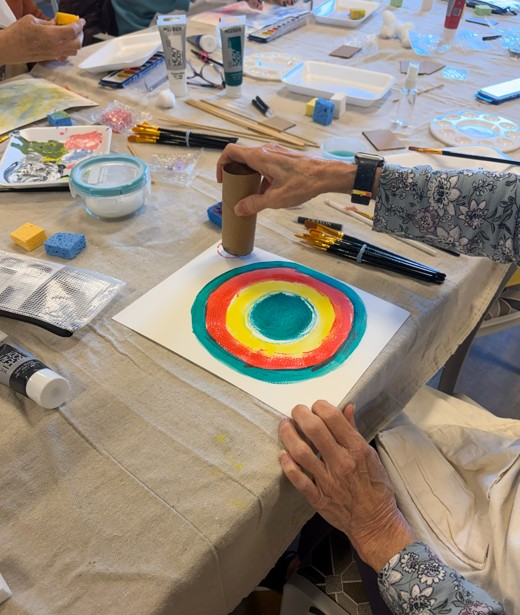
One of my favorite parts of teaching art classes in 55+ communities is what happens in the moments between instruction.
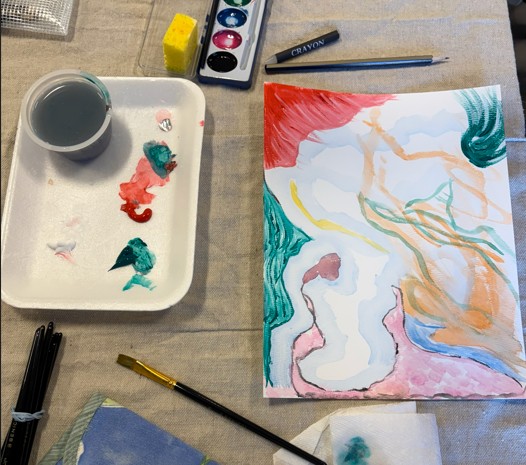
As we create, students often begin sharing memories from years ago—art classes they took growing up, favorite teachers who encouraged them, techniques they once learned and loved. They talk about charcoal, watercolor, drawing from life, or the feeling of being in an art classroom they haven’t thought about in decades.
You can hear it in their voices: they missed it, and are still curious to learn.
There’s a happiness that comes from returning to something familiar yet long forgotten. For many, creating art again feels like reconnecting with a part of themselves that had been quietly waiting.
What’s especially meaningful is how excited they are to learn—whether the technique is brand new or something they’ve done before. The curiosity, engagement, and joy show up as if it were their very first art class.
These moments are a powerful reminder that art takes practice, but it never disappears. It’s always there to return to, ready to be picked up again without judgment.
Why Seniors Thrive with Creative Routine
Many seniors are drawn to routine because it provides predictability, comfort, and a sense of control. Creative routines—like a weekly art class or a dedicated time to make—offer structure while still leaving room for freedom and self-expression.
This balance is especially beneficial as life rhythms change with age.
10 Reasons Adults & Seniors Should Be Creating Art
1. It Keeps the Brain Active Without Pressure
Art gently challenges the brain without the stress of right or wrong answers.
2. It Supports Memory & Cognitive Health
Creative work engages memory, association, and storytelling.
3. It Reduces Stress & Anxiety
The physical act of creating can be meditative and calming.
4. It Creates Purpose & Anticipation
Having something to look forward to adds meaning to daily and weekly routines.
5. It Encourages Emotional Expression
Art provides a nonverbal outlet for processing feelings and experiences.
6. It Builds Confidence & Self-Trust
Completing an artwork fosters accomplishment and pride.
7. It Strengthens Fine Motor Skills
Using art tools helps maintain coordination and dexterity.
8. It Supports Social Connection
Group art settings encourage conversation and reduce isolation.
9. It Reinforces Healthy Routine
Creative habits add structure without rigidity.
10. It Reconnects Us with Play
Art invites curiosity, experimentation, and joy—at any age.
The Takeaway
Creative play isn’t about talent—it’s about engagement, expression, and well-being. For adults and seniors, art becomes a way to care for the brain, process life experiences, and reconnect with joy.
Creativity doesn’t fade with age. It waits patiently for us to return to it.
Keep the Inspiration Coming
If you loved this, you'll love Sketchbook Stories—my free weekly email where creativity shows up every Wednesday with ideas, art, behind-the-scenes peeks, and more. Join Sketchbook Stories below!
Know someone who could use a spark of creativity? Share this with them and help bring a little more inspiration into their week.
Sketchbook Stories
Where creativity appears in your inbox every Wednesday!
Plus, subscribers get:
Exclusive art drops + early access to new products
Invites to special events and workshops
Behind-the-scenes studio peeks
It will be bursting with creativity, imagination, original art, and thoughtful reflections
Follow the Creativity
© 2026. All rights reserved.


Join the Creative Canvas
Get art, inspiration, and studio updates delivered to your inbox.
Subscribe to receive The Sketchbook Stories—your weekly look into art, creativity, and the studio process—plus early access to workshops, events, and new work from Studio Agnew.
Thoughtful, creative, and always rooted in making.
Visit the Studio
Monday
10:00 AM – 6:00 PM
Tuesday
Studio Closed
Wednesday
10:00 AM – 8:00 PM
Thursday
10:00 AM – 6:00 PM
Friday
10:00 AM – 5:00 PM
6-9 PM Private Bookings by Appointment
Saturday
10:00 AM – 3:00 PM
4-9 PM Private Bookings by Appointment
Sunday
Studio Closed
Private Bookings by Appointment
Studio hours may vary based on scheduled classes, workshops, and private events. Please view the class schedule or contact Studio Agnew before visiting.
Contact
Studio Agnew is a working creative studio in the heart of Howey-in-the-Hills, Florida, offering art classes, workshops, and creative experiences for artists of all ages and skill levels.
689-582-8959 | lindsay@studioagnew.com
Studio Agnew Information
Visit the Studio
107 E. Central Ave., Howey-in-the-Hills, FL. 34737