
The Creative Life Between Structure and Movement
From a Canvas Rebel feature to a shifting home studio practice, how evolving space, light, and process is shaping the way I create and teach through Studio Agnew.
5/19/20264 min read
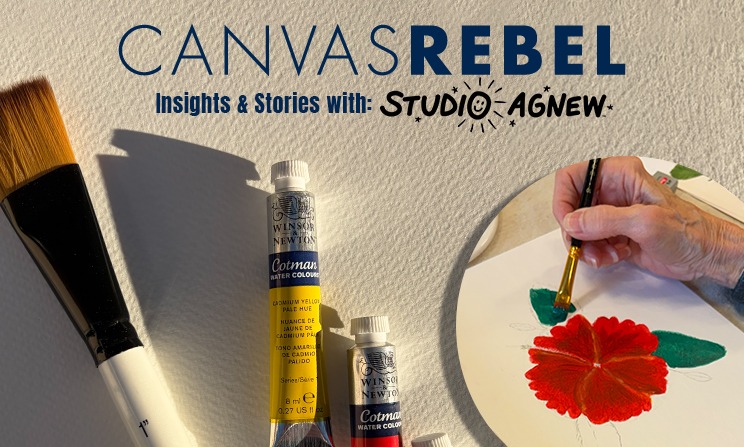
A Moment Captured, and a Life Still in Motion
I recently shared a conversation with Canvas Rebel about my journey as an artist in response to the question “Did you always know you wanted to pursue a creative or artistic career? When did you first know?” It took me back through childhood oil painting classes, my time at Ringling College of Art + Design, and eventually into Walt Disney Imagineering before building Studio Agnew.
Reading it back feels like a snapshot of a path that was real at the time, but is still very much unfolding. My creative practice has never really stayed in one place—it’s always been moving between structure and flow.
What I see more clearly now is that I work somewhere between a grounded home studio practice and a more fluid way of responding to light, space, and energy as I create. That balance shows up not just in how I make work, but in how I teach and design creative experiences through Studio Agnew.
My Studio Has a Foundation—But My Process Keeps Evolving
I do have a home art studio. It’s a dedicated space in my house where I paint, create, and return to my work. It gives me structure. It gives me consistency. It gives me a place to come back to.
But even with that, nothing about how I use it is fixed.
I’m always shifting things around—moving furniture slightly, adjusting where I set up depending on light, changing the layout when something feels off, or following whatever part of the space feels most open that day.
Some days I stay fully in the studio. Other days I drift into different parts of the house because the light or energy just works better there.
It’s not about getting everything perfect. It’s about noticing what actually supports the work I’m trying to do.
Light, Environment, and Creative Responsiveness
Lately I’ve been paying a lot more attention to light—where it falls, how it changes through the day, and how it shifts the way I see what I’m working on.
Sometimes I’ll move just a few feet and suddenly something clicks differently. The work feels clearer, or softer, or more honest depending on where I am.
So instead of trying to force a setup, I’ve learned to work with what’s already happening in the space.
For me, creativity really does need both structure and movement. If it’s only structure, it feels rigid. If it’s only movement, it feels ungrounded. I need both for it to feel alive.
Where This Comes From in My Creative Path
When I look back, this makes sense.
From early oil painting classes in a master artist’s home, to studying design at Ringling College, to working in immersive storytelling at Walt Disney Imagineering, I’ve always been drawn to creative work that exists in space—work that people step into, experience, and feel.
That same thread is still in everything I do now with Studio Agnew.
I’ve never been drawn to work that just sits still. I’m more interested in things that shift depending on who’s in the room, how people are engaging, and what the moment calls for.
So it makes sense that my own creative process works the same way.
Studio Agnew: From My Home Studio to Everywhere Creativity Shows Up
Studio Agnew starts in my home studio, but it doesn’t stay there. It also shows up in schools, community spaces, corporate workshops, private events—anywhere people are willing to make something with their hands and see what happens.
What I really care about is getting people past that first moment of “I don’t know what I’m doing” and into just trying. Most people aren’t lacking creativity—they’ve just gotten a little disconnected from it.
My job is to make that first step feel easy. No pressure, no overthinking—just a simple entry point and a lot of encouragement once they’re in it. And usually, once that shift happens, creativity takes care of the rest.
What I’m Learning Right Now About Consistency
I used to think consistency meant everything staying the same—same setup, same rhythm, same environment.
Now I see it differently.
Consistency is more about staying connected to the work, even when things around it shift. My studio at home gives me a foundation, but what happens inside it is always changing. And that balance has actually made my work feel more alive, not less stable.
A Note on the Canvas Rebel Feature
The Canvas Rebel interview captured a meaningful moment in my journey, and I’m really grateful for it. It reflects a chapter that was real and important.
But like anything creative, things keep evolving.
That version of my story was true. And so is this one. They’re just different points along the same path.
Read the Full Interview
You can read the original conversation here (Canvas Rebel interview): Did you always know you wanted to pursue a creative or artistic career? When did you first know?
Closing Thought
At the end of the day, I don’t need a perfectly fixed space to create. I just need a foundation I can return to—and the freedom to shift things when the work calls for it.
That balance between structure and movement is really where my creative practice lives. And it’s where Studio Agnew keeps growing from too.
Follow the Creativity
© 2026. All rights reserved.


Join the Creative Canvas
Get art, inspiration, and studio updates delivered to your inbox.
Subscribe to receive The Sketchbook Stories—your weekly look into art, creativity, and the studio process—plus early access to workshops, events, and new work from Studio Agnew.
Thoughtful, creative, and always rooted in making.
Visit the Studio
Monday
10:00 AM – 6:00 PM
Tuesday
Studio Closed
Wednesday
10:00 AM – 8:00 PM
Thursday
10:00 AM – 6:00 PM
Friday
10:00 AM – 5:00 PM
6-9 PM Private Bookings by Appointment
Saturday
10:00 AM – 3:00 PM
4-9 PM Private Bookings by Appointment
Sunday
Studio Closed
Private Bookings by Appointment
Studio hours may vary based on scheduled classes, workshops, and private events. Please view the class schedule or contact Studio Agnew before visiting.
Contact
Studio Agnew is a working creative studio in the heart of Howey-in-the-Hills, Florida, offering art classes, workshops, and creative experiences for artists of all ages and skill levels.
689-582-8959 | lindsay@studioagnew.com
Studio Agnew Information
Visit the Studio
107 E. Central Ave., Howey-in-the-Hills, FL. 34737