
The Secret Cultural Funnel That Inspires Artists & Designers
How ideas move from quiet observation to cultural trends.
3/16/20263 min read
Originality is less about invention and more about observation—seeing what’s already there in a new way. SURPRISE, all it takes is paying attention.
A color or shape appears repeatedly. From there, a new visual language quietly begins to form.
Before long, others notice.
What started as a small idea begins moving through culture like a funnel, spreading from a few observant creatives into entire industries.
I call this the cultural funnel—one of the most powerful forces shaping art, fashion, and graphic design today.
Paying Attention to Culture Doesn’t Mean Agreeing With It
Paying attention to culture as an artist or designer doesn’t mean you have to agree with every trend, movement, or popular idea circulating at the moment.
It simply means noticing and seeing what is happening around you with an open mind.
Artists and designers are observers by nature. We watch how people behave, how they dress, what colors begin appearing everywhere, what symbols suddenly show up in unexpected places, and what conversations are shaping culture in the moment. That’s how and why curiosity plays a role—guiding us to notice new ideas, whether in art exhibits, down the runway, while scrolling through social feeds, or even in everyday interactions.
The power in that awareness is choice.
We can follow the trend.
We can reject it.
Or we can spin it into something entirely our own.
Observation doesn’t require agreement—it requires curiosity.
Where Does Originality Come From?
People often ask where originality comes from.
Is it pure invention? Or is it influence?
Maybe originality is less about creating something from nothing and more about noticing something first—an idea, a pattern, or a shift happening within culture—and expressing it in a way that others suddenly recognize. And that recognition is where things start to spread.
One idea appears.
Someone takes notice.
Another person adapts it.
Soon it evolves into something larger than the original idea.
That’s how cultural movements begin.
A Personal Example: Experimentation Without Rules
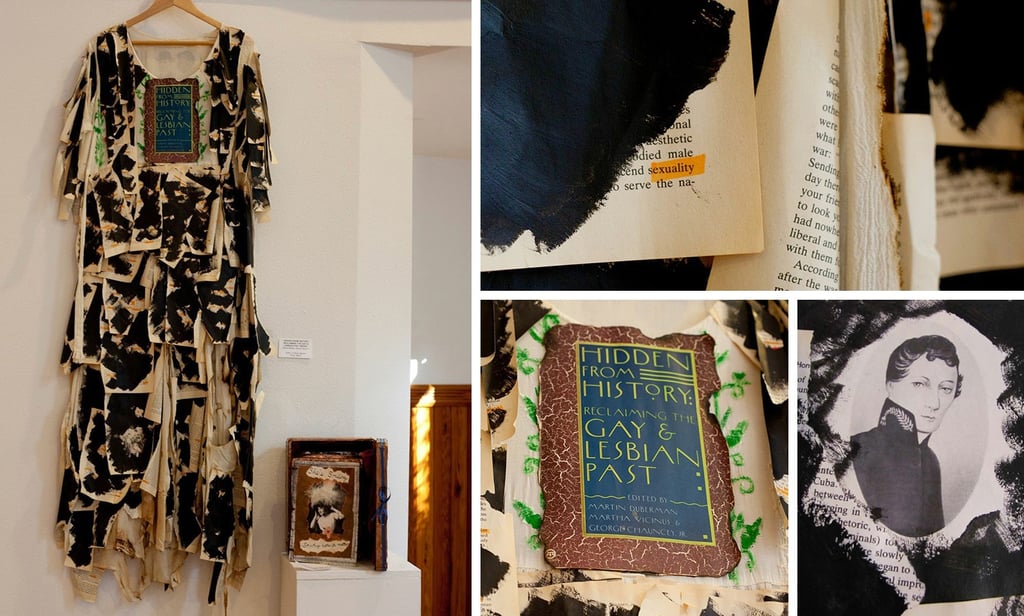
In college, we had an assignment to alter a book. There were no rules—just a prompt to explore.
I decided to approach the assignment completely differently than anyone else. I ripped every page out of the book, deconstructed it, and experimented with it as a material. I burned edges, highlighted words, painted on every page, and then glued them together onto a vintage dress. I even burned the dress itself, using the book’s cover as a statement piece on the front chest.
Exploring the potential in what already exists—and imagining what it could become—is what drives us. The story of the book became my interpretation, expressed through this piece of wearable art.
Looking back, that moment perfectly illustrates the first stage of the cultural funnel: noticing potential, experimenting with it, and creating something new that others are compelled to experience, interpret, and respond to—whether as feeling, thought, or emotion.
Why Designers Pay Attention First
Fashion and graphic design are probably two of the industries most sensitive to cultural shifts.
They operate as visual communication systems, often with little to no words.
A color palette can signal a decade.
A typeface can communicate authority or rebellion.
A silhouette in fashion can define an era.
Design translates culture into visuals before most people even realize a shift is happening. That’s why designers tend to notice changes early. They are constantly observing the world around them—fashion, architecture, music, technology, social behavior, and evolving aesthetics.
All of these elements eventually find their way into visual communication.
The Cultural Funnel Creatives Embody
Observation
Artists and designers notice shifts in culture before most people do. They pay attention to colors, shapes, symbols, stories, and behaviors—the small details that hint at a larger movement.
Experimentation
Creatives begin playing with the idea in small ways. They test materials, styles, or concepts to see what resonates, often pushing boundaries and reimagining what already exists.
Early Adopters
Other creatives notice and reinterpret the idea, adding their own perspective and helping it evolve. Collaboration and influence spread it further within the creative community.
Trend Formation
The idea gains traction across industries like fashion, graphic design, and visual media. It becomes more visible, shaping the look, feel, and voice of creative culture.
Mainstream Culture
The public begins seeing the idea everywhere. What started as a small experiment now influences mass trends, popular culture, and the broader visual landscape.
The Real Role of the Artist
For artists and designers, cultural awareness isn’t about blindly following trends.
It’s about understanding the environment you’re creating within.
Once you see the patterns forming, you get to decide what to do with them.
Follow them.
Ignore them.
Transform them into something entirely new.
Or go Rouge and do the opposite.
And sometimes, that transformation is exactly where the next cultural shift begins.
Sketchbook Stories
Where creativity appears in your inbox every Wednesday!
Plus, subscribers get:
Exclusive art drops + early access to new products
Invites to special events and workshops
Behind-the-scenes studio peeks
It will be bursting with creativity, imagination, original art, and thoughtful reflections
Follow the Creativity
© 2026. All rights reserved.


Join the Creative Canvas
Get art, inspiration, and studio updates delivered to your inbox.
Subscribe to receive The Sketchbook Stories—your weekly look into art, creativity, and the studio process—plus early access to workshops, events, and new work from Studio Agnew.
Thoughtful, creative, and always rooted in making.
Visit the Studio
Monday
10:00 AM – 5:30 PM
Tuesday
Closed (Off-Site Workshops)
Wednesday
10:00 AM – 5:30 PM
Thursday
10:00 AM – 5:30 PM
Friday
10:00 AM – 6:00 PM
Saturday
10:00 AM – 5:00 PM
Sunday
Private Bookings by Appointment
Studio hours may vary based on scheduled classes, workshops, and private events. Please view the class schedule or contact Studio Agnew before visiting.
Contact
Studio Agnew is a working creative studio in the heart of Howey-in-the-Hills, Florida, offering art classes, workshops, and creative experiences for artists of all ages and skill levels.
689-582-8959 | lindsay@studioagnew.com
Studio Agnew Information
Visit the Studio
107 E. Central Ave., Howey-in-the-Hills, FL. 34737