
When Infrastructure Becomes Art: Designing a 75-Foot Water Tower in Ormond Beach, Florida
A behind-the-scenes look at creating large-scale environmental graphic design—where storytelling, scale, and public space intersect.
5/6/20263 min read
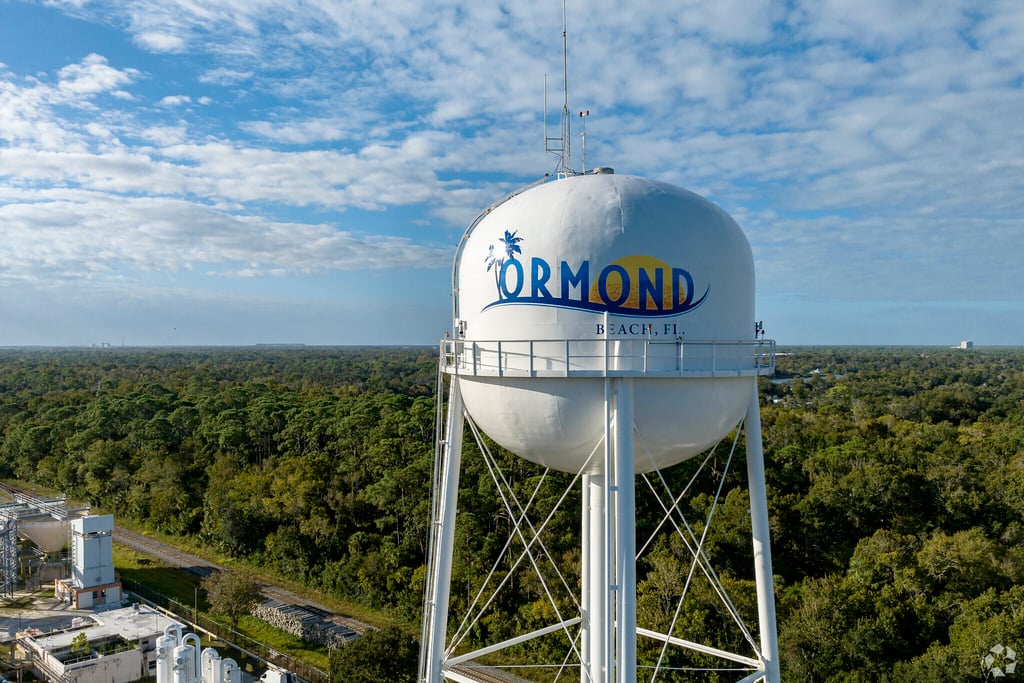
Some projects don’t stay small for long.
They expand—into space, into scale, and into the landscape itself.
The Ormond Beach water tower project was one of those experiences for me.
Standing 75 feet tall near Perrott Drive and Tomoka Avenue in Ormond Beach, Florida, the tower is more than infrastructure. It’s a landmark—something that quietly anchors a piece of the community’s visual identity.
This project came during a major restoration effort after the tower underwent extensive repairs. The goal was to reimagine its presence—not just as a functional structure, but as something that could contribute to the surrounding environment in a meaningful way.
That’s where the artwork came in.
Designing at this scale changes everything.
I come from a background in Environmental Graphic Design through Walt Disney Imagineering, where I was trained to think about storytelling in space—how design moves through environments, how people experience visuals in motion, and how places communicate without words.
That foundation completely shaped how I approached this project.
Because when you’re designing for something 75 feet tall, you’re not working on a canvas anymore.
You’re working with architecture, distance, movement, and visibility.
You have to think about how the design reads from the street, from passing cars, under shifting light, and across different times of day. It has to be immediate at scale—but still hold intention up close.
That balance is where environmental design lives.
There’s also something unique about public-facing work like this.
Once it’s installed, you lose control of how it’s experienced.
It becomes part of someone’s daily life—something they pass without thinking, yet still absorb over time. It exists in the background of routines, slowly becoming part of how a place feels.
That’s what makes public art different.
It doesn’t ask for attention.
It just exists.
And over time, it becomes familiar.
This water tower is exactly that.
A functional structure transformed into a visual landmark—something that connects utility with identity. It’s a reminder that even the most ordinary infrastructure can hold storytelling, design, and meaning.
If you’d like to explore more of my environmental graphic design work and large-scale creative projects over the years, you can visit my portfolio.
Keep the Inspiration Coming
If you loved this, you'll love Sketchbook Stories—my free weekly email where creativity shows up every Wednesday with ideas, art, behind-the-scenes peeks, and more. Join Sketchbook Stories below!
Know someone who could use a spark of creativity? Share this with them and help bring a little more inspiration into their week.
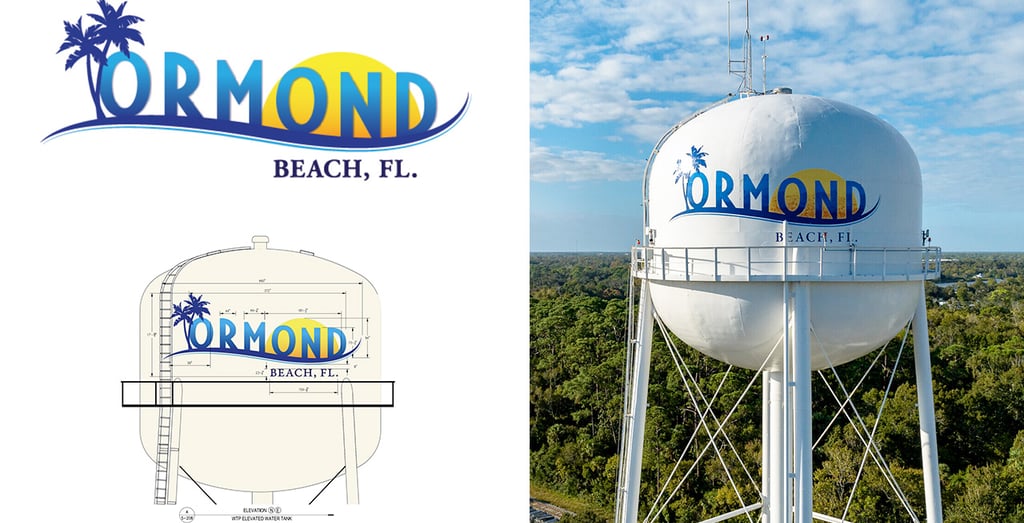
Projects like this also stretch how you think as a designer.
You’re not just creating visuals—you’re shaping experience. You’re considering proportion, repetition, distance, and how something interacts with the physical world around it.
It’s design, but at a civic scale.
And there’s something grounding about that.
Because once it’s installed, it doesn’t belong to you in the same way anymore. It belongs to the place. To the people who pass it. To the environment it lives in.
And maybe that’s the point.
Not everything you create is meant to be held.
Some work is meant to live in the world—weathered by time, shaped by context, and experienced in passing.
The Ormond Beach water tower is one of those pieces for me.
A reminder that design doesn’t always sit on a screen or a page.
Sometimes it rises into the sky.
Photo credit: Oak Forest / homes.com
Sketchbook Stories
Where creativity appears in your inbox every Wednesday!
Plus, subscribers get:
Exclusive art drops + early access to new products
Invites to special events and workshops
Behind-the-scenes studio peeks
It will be bursting with creativity, imagination, original art, and thoughtful reflections
Follow the Creativity
© 2026. All rights reserved.


Join the Creative Canvas
Get art, inspiration, and studio updates delivered to your inbox.
Subscribe to receive The Sketchbook Stories—your weekly look into art, creativity, and the studio process—plus early access to workshops, events, and new work from Studio Agnew.
Thoughtful, creative, and always rooted in making.
Visit the Studio
Monday
10:00 AM – 5:30 PM
Tuesday
Closed (Off-Site Workshops)
Wednesday
10:00 AM – 5:30 PM
Thursday
10:00 AM – 5:30 PM
Friday
10:00 AM – 6:00 PM
Saturday
10:00 AM – 5:00 PM
Sunday
Private Bookings by Appointment
Studio hours may vary based on scheduled classes, workshops, and private events. Please view the class schedule or contact Studio Agnew before visiting.
Contact
Studio Agnew is a working creative studio in the heart of Howey-in-the-Hills, Florida, offering art classes, workshops, and creative experiences for artists of all ages and skill levels.
689-582-8959 | lindsay@studioagnew.com
Studio Agnew Information
Visit the Studio
107 E. Central Ave., Howey-in-the-Hills, FL. 34737